Attachment Styles Aren’t Life Sentences — Here’s the Truth
If you’ve spent any time in the self-development or pop psychology world lately, you’ve probably heard about attachment styles.
They’re everywhere: TikTok, relationship advice columns, podcasts, even memes. However, while attachment theory is an incredibly powerful lens, much of what is circulating online oversimplifies a deeply nuanced topic.
As a therapist who works with all sorts of folks in various relationship structures, here’s what I want you to know about attachment styles: the real & empowering truth.
Attachment Styles Are Not Labels
First, attachment styles are descriptions, not diagnoses. They describe patterns of behavior you may have learned early in life, usually through relationships with caregivers. They’re meant to help you understand your nervous system, needs, and instincts — not to box you in forever.
The four main attachment styles are:
- Secure: Comfortable with closeness and independence.
- Anxious: Preoccupied with relationships and fear of abandonment.
- Avoidant: Value independence, struggle with vulnerability.
- Disorganized/Fearful-Avoidant: Desire connection but fear intimacy.
Research continues to show that attachment can shift across contexts, and earned secure attachment is possible (Simpson & Rholes, 2024).
The Origins of Attachment Theory
Attachment theory was first developed by British psychologist John Bowlby in the mid-20th century, who proposed that early relationships between children and caregivers profoundly shape emotional development.
Building on Bowlby’s work, psychologist Mary Ainsworth later conducted the famous “Strange Situation” experiments, identifying distinct patterns of attachment behaviors in young children. Check out her book Patterns of Attachment here! Their research laid the foundation for what we now understand about attachment styles, showing that how we connect (or protect ourselves) in early relationships can influence patterns throughout life.
Modern attachment research continues to evolve, expanding to explore how attachment impacts adult romantic relationships, friendships, and self-regulation today.
Your Attachment Style Isn’t Your Fault
Attachment patterns are adaptations, which are your brain and body’s way of protecting you in the relationships you grew up with. They are survival strategies, not flaws. Even if it has turned into something you want to shift, let’s take the blame off everyone involved, yourself included.
If you find yourself struggling with intimacy, conflict, or self-trust, it’s not because you’re “too much” or “too distant.” It’s because your system learned early on how to keep you safe, and it may still be running those patterns even when they no longer serve you. We do this with so many things, not just our attachment styles. What once served as a survival mechanism is no longer serving us today.
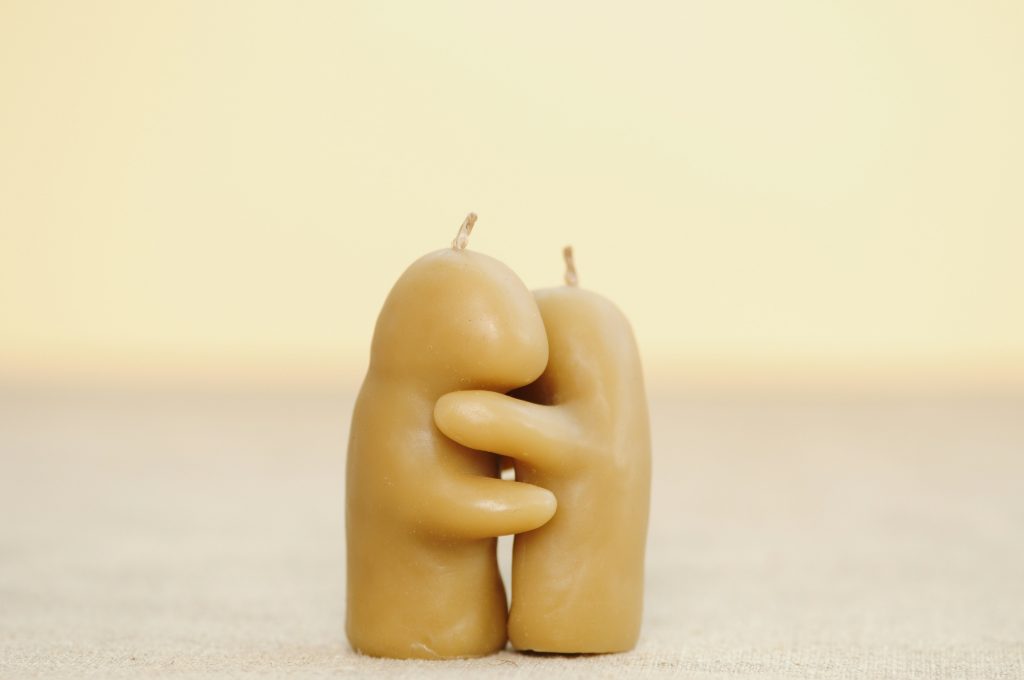
Attachment Styles Are Flexible, Not Fixed
You are not stuck with the attachment patterns you learned. You can develop more security through healing relationships (including therapy, friendships, or romantic relationships).
Recent research in Attachment & Human Development (2023) highlights how earned secure attachment often emerges later in life through consistent and reparative experiences.
Healing attachment looks like:
- Feeling safer expressing your needs
- Trusting others’ consistency
- Soothing yourself through fear or conflict
- Building reciprocal, trusting connections
It’s not about being “perfectly secure.” It’s about feeling freer to love and be loved.
Beware Of Over-Pathologizing Yourself (Or Others)
Pop-psychology sometimes turns attachment styles into a dating quiz: “Swipe left on avoidants!” But attachment dynamics are complicated. We literally saw this play out on season 8 of Netflix’s Love is Blind. Everyone has different layers, adaptations, and histories that deserve compassion, not quick judgments.
If someone triggers your attachment wounds, it doesn’t automatically mean they’re unsafe. It might just mean there’s room for deeper work — individually, together, or both.
Attachment styles can offer powerful insight into your patterns, but they’re not prisons.
You’re capable of growth, healing, and a more secure connection, regardless of where you’re starting.
Want personalized support exploring your attachment patterns and building stronger connections? Work with me or one of the amazing humans on my team.
If you want more writing like this, you can browse my posts on mental health, sex, education and relationships.